What Charlotte & Lake Norman Homeowners Should Know Before Buying a Water Softener
If you’re considering a water softener for your Charlotte or Lake Norman home, one of your first questions is probably simple:
How much does a water softener cost?
The answer depends on the quality of the equipment, the size of your home, your water conditions, and the complexity of the installation.
At Artisanal Water Solutions, our premium Platinum Series water softeners typically cost $3,495, with professional installation included in some applications. When installation is charged separately, it generally adds $300–$400.
We also offer a combination water softener and whole-house catalytic carbon filtration system for approximately $3,795, providing the benefits of both technologies in one system.
But before deciding which system is right for your home, it’s important to understand what you’re buying and whether your water actually needs softening.
What Does a Water Softener Cost in Charlotte and Lake Norman?
Water softener prices can vary considerably depending on the equipment, installation, and water conditions.
Here are typical prices for our professionally installed residential systems:
| Water Treatment System | Typical Equipment Price |
| Platinum Series Water Softener | $3,495 |
| Platinum Series Carbon Filtration + Softener Combo | $3,795 |
| Professional Installation (when additional) | $300–$400 |
| Well-Water Sediment Prefiltration | Additional, based on application |
These prices represent our premium residential equipment, not basic cartridge systems or entry-level water softeners.
Our Platinum Series is designed for homeowners who want high-quality equipment, dependable performance, and long-term serviceability.
What Makes One Water Softener More Expensive Than Another?
Two water softeners may look similar, but their internal components, capacity, control valves, warranties, and overall performance can be very different.
When comparing systems, homeowners should consider more than just the purchase price.
1. Equipment Size and Capacity
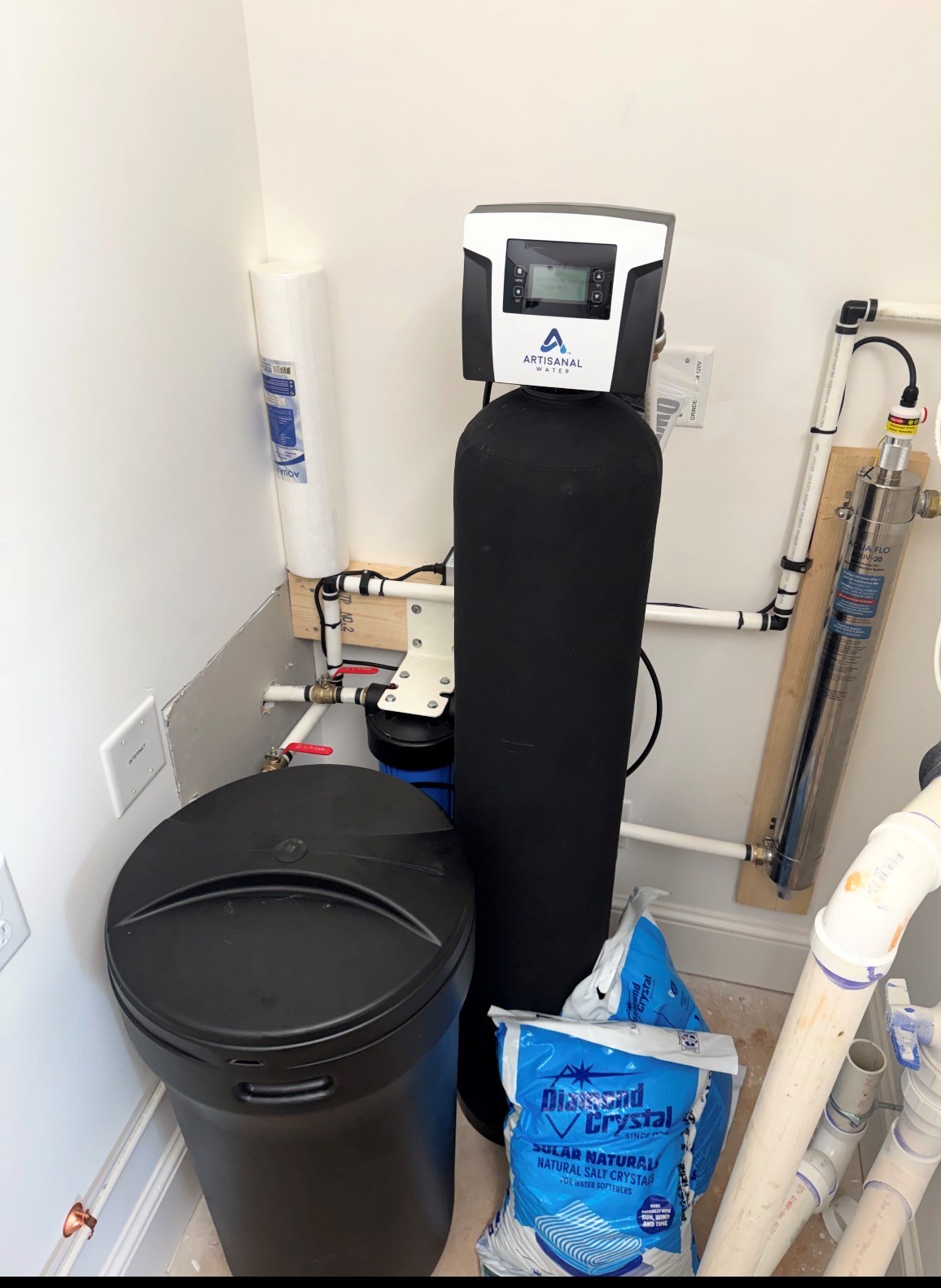
Our Platinum Series water softeners use a 10-inch diameter by 54-inch tall mineral tank with 1.5 cubic feet of media capacity.
The size of a water softener affects how much hardness it can treat between regeneration cycles and how much water it can process.
Proper sizing is important.
A system that is too small may regenerate unnecessarily often or struggle to keep up with household demand. A properly sized system provides consistent performance while using salt and water efficiently.
For our combination filtration and softening systems, the media capacity is shared between catalytic carbon and softening resin.
2. Water Flow Rates
Water flow is an important consideration, especially in larger homes with multiple bathrooms.
Our Platinum Series systems feature 1-inch inlet and outlet connections, designed to accommodate higher residential flow rates.
This matters when multiple showers, faucets, and appliances are operating simultaneously.
However, connection size is only one factor. The amount and type of treatment media, control valve, and overall system design also determine actual flow performance.
3. Digital Controls and Water Usage Monitoring
Modern water softeners offer much more control than older mechanical systems.
Our Platinum Series features a fully programmable digital control valve that allows us to configure the equipment for the home’s specific water conditions.
The system also tracks water usage.
This information can be useful beyond water treatment. Unusual changes in water consumption may help identify potential plumbing issues, excessive water usage, or changes in household water demand.
Proper programming also helps optimize regeneration frequency, salt consumption, and system performance.
4. Warranty and Equipment Quality
A water softener is a long-term investment in your home.
Our Platinum Series equipment includes:
- Lifetime warranty on the mineral tank
- 10-year warranty on the control valve
- High-flow 1-inch connections
- Fully programmable digital controls
- Water usage monitoring
- Professional installation and local service support
Warranty coverage is subject to the manufacturer’s terms.
When comparing quotes, ask what the warranty actually covers and whether the company selling the equipment will be available to service it in the future.
Do Charlotte and Lake Norman Homes Really Need a Water Softener?
This is an important question because our local water conditions are different from many other parts of the country.
Much of the municipal water we test throughout Charlotte and Lake Norman is relatively soft, commonly measuring approximately 2–5 grains per gallon.
That is significantly lower than the hardness found in many areas of the United States.
So, does that mean a water softener is unnecessary?
Not necessarily. But it does mean homeowners should understand the benefits before making the investment.
Even moderately hard water can contribute to:
- White mineral spots on faucets and shower doors
- Scale buildup on fixtures and appliances
- Increased soap and detergent consumption
- Soap residue on shower surfaces
- Reduced efficiency in certain water-heating applications
Water softening removes calcium and magnesium, the minerals responsible for hardness.
For homeowners who want to minimize scale and spotting, softening can provide benefits even when the original water isn’t extremely hard.
However, a water softener does not address every water-quality concern.
What About Chlorine and Other Contaminants?
Many homeowners contact us because they are concerned about more than hardness.
Common concerns include chlorine taste and odor, shower-water quality, and contaminants such as PFAS.
A traditional water softener is not designed to remove chlorine or provide broad contaminant filtration.
That’s why we often recommend considering whole-house filtration alongside softening.
At Artisanal Water Solutions, we offer a combination system that incorporates catalytic carbon filtration and water softening in one unit.
The catalytic carbon helps reduce chlorine and improve taste and odor, while the softening resin removes hardness minerals.
Additional contaminant-reduction capabilities depend on the media, system design, and applicable certifications.
Why Our Combination System Is Popular
For homeowners on municipal water, our combination system can be a particularly attractive option.
Our Platinum Series water softener typically costs $3,495.
Our catalytic carbon filtration and softening combination system typically costs $3,795.
That’s only a $300 difference.
Because much of our local municipal water is relatively soft, the amount of softening resin required can be smaller than in areas with extremely hard water.
This allows us to incorporate catalytic carbon filtration and softening into one properly designed treatment system.
For many homeowners, the additional filtration benefits make the relatively small price difference worthwhile.
Rather than choosing between filtered water and softened water, you can enjoy the benefits of both throughout your home.
Is Installing a Water Softener on Well Water Different?
Yes. Private well water can require a different approach.
Unlike municipal water, which is treated and monitored by a public utility, private well water can vary considerably from one property to another.
Throughout the Lake Norman area, we regularly encounter well-water conditions involving:
- Elevated hardness
- Iron and manganese
- Low pH
- Sediment
- Sulfur odors
- Other naturally occurring contaminants
These conditions can affect the performance of a water softener and may require additional treatment.
Why We Recommend Sediment Prefiltration on Well Water
For our typical well-water softener installations, we recommend a high-flow commercial cartridge filter equipped with a 5-micron sediment cartridge installed before the softener.
This helps capture sediment before it enters the water softener, protecting the equipment from particulate buildup and reducing sediment reaching downstream plumbing and appliances.
It’s an important part of protecting the investment.
Depending on the water-test results, additional equipment may also be needed to address iron, low pH, sulfur, or other conditions.
A sediment cartridge does not remove dissolved contaminants such as iron or nitrates.
This is why we believe testing well water before recommending treatment is essential.
For most municipal-water installations, this additional sediment prefilter is not necessary.
What Does Professional Water Softener Installation Include?
Installing a water softener involves more than simply connecting two pipes.
A proper installation requires evaluating the home’s plumbing, identifying an appropriate equipment location, and configuring the system for the home’s water conditions.
Installation may involve:
- Connecting to the home’s main water supply
- Installing appropriate bypass plumbing
- Providing a suitable drain connection for regeneration
- Configuring the digital control valve
- Programming hardness and regeneration settings
- Checking for leaks and verifying proper operation
- Explaining system operation and maintenance to the homeowner
Many standard installations can be completed in approximately 3–5 hours.
Installation costs vary depending on accessibility, existing plumbing, and any additional work required.
At Artisanal Water Solutions, professional installation is sometimes included in the equipment price. When billed separately, typical installation costs are approximately $300–$400.
How Much Does It Cost to Maintain a Water Softener?
The purchase price is only one part of the total cost of ownership.
Water softeners also require salt, water for regeneration, and occasional maintenance.
Salt Consumption
Most residential water softeners use salt to regenerate the softening resin.
The amount of salt consumed depends on the water hardness, household water usage, resin capacity, and regeneration settings.
Because Charlotte-area municipal water is generally relatively soft, a properly programmed system may use less salt than a comparable system treating very hard water.
Regeneration
Modern demand-based softeners use water consumption information to help determine when regeneration is needed.
Proper programming can reduce unnecessary regeneration cycles, conserving salt and water.
Routine Service
Like any piece of household equipment, a water softener should be checked periodically to ensure it’s operating properly.
Maintenance may include checking salt levels, inspecting components, reviewing settings, and confirming that the equipment is treating the water as intended.
Well-water applications may require additional maintenance, particularly when sediment prefilters or other treatment equipment are installed.
Is a $3,495 Water Softener Worth It?
That depends on your water conditions, what you want to improve, and how much you value the benefits.
For a homeowner dealing with significant hardness, scale buildup, or excessive soap consumption, a properly selected water softener can make a noticeable difference.
For a homeowner with relatively soft municipal water, the benefits may be more modest.
That’s why we don’t believe every Charlotte-area homeowner automatically needs a water softener.
We also believe it’s important to consider the long-term value of the equipment.
A quality system with appropriate capacity, reliable controls, strong warranty coverage, and professional local service may provide better long-term value than simply choosing the lowest-priced option.
And for homeowners who also want to reduce chlorine and improve water taste and odor, our combination filtration and softening system may be an even better investment.
Choosing the Right Water Softener for Your Charlotte-Area Home
The best water softener isn’t necessarily the largest, most expensive, or most heavily advertised system.
It’s the system that is properly matched to your water conditions and household needs.
At Artisanal Water Solutions, we start by evaluating the water and understanding what the homeowner wants to improve.
We then explain the available treatment options, what each system does, and what it costs.
We don’t use high-pressure sales tactics or pricing gimmicks.
Just straightforward recommendations and straightforward pricing.
Whether your home is in Charlotte, Huntersville, Cornelius, Davidson, Mooresville, Denver, or the surrounding Lake Norman area, we’re here to help you understand your water and make an informed decision.
Love Your Water.
Quality treatment starts with knowing what’s actually in your water. Contact Artisanal Water today and get a free water test expert guidance for your Charlotte area water. Call or text (704) 315-6344 or fill out our contact form
