If you rely on a private well in the Charlotte or Lake Norman area, naturally acidic water may be one of the biggest threats to your home’s plumbing—and many homeowners don’t even realize it’s happening.
Throughout Mooresville, Huntersville, Cornelius, Denver, Concord, and the surrounding communities, we frequently test private wells with low pH. Unlike iron or sulfur, acidic water often has no noticeable smell, taste, or color. Instead, it slowly corrodes plumbing, shortens the life of water heaters and appliances, and can eventually lead to expensive repairs.
The good news is that low pH is easy to identify with professional water testing and can usually be corrected with the right treatment system.
What Is Low pH in Well Water?
The pH scale measures how acidic or alkaline water is, ranging from 0 to 14.
- 7.0 = Neutral
- Below 7.0 = Acidic
- Above 7.0 = Alkaline
For most residential water supplies, a pH between 6.5 and 8.5 is considered ideal.
When well water falls below 6.5, it becomes increasingly corrosive and may begin attacking metal plumbing, fixtures, and appliances.
Many private wells throughout North Carolina naturally produce slightly acidic water because groundwater flows through rock formations that contain very little limestone to naturally neutralize acidity.
Why Is Low pH Common Around Charlotte and Lake Norman?
One of the most common questions we hear is:
“Why is my well water acidic?”
The answer is usually geology.
Much of the Charlotte region, including portions of Iredell, Lincoln, Cabarrus, Rowan, and Mecklenburg counties, sits on granite and metamorphic bedrock. Unlike areas with abundant limestone, these formations don’t naturally add alkaline minerals to groundwater.
As rainwater filters through the soil and into underground aquifers, the water often remains naturally acidic by the time it reaches your well.
This is one reason low pH is one of the more common water quality issues we encounter during well water testing throughout the Lake Norman area.
Signs Your Well Water May Be Too Acidic
Unlike rusty water or sulfur odors, acidic water can quietly damage your plumbing for years before homeowners notice a problem.
Common signs include:
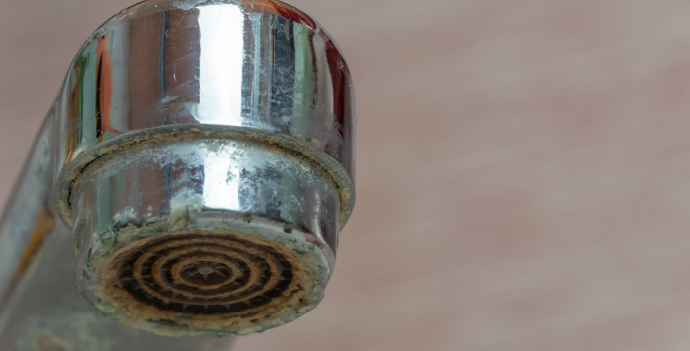
- Blue-green stains around sinks and tubs
- Metallic taste in drinking water
- Pinhole leaks in copper plumbing
- Corrosion on plumbing fixtures
- Water heater failures
- Green or blue residue around faucets
- Plumbing repairs becoming more frequent
Many homeowners assume these problems are simply part of owning an older home, when the real cause is actually corrosive water. Low pH is just one of many issues homeowners experience with private wells. Other common problems include iron staining, sulfur odors, hardness, and bacteria concerns. Learn more about common well water problems in Charlotte and Lake Norman
Why Is Low pH a Problem?
Acidic water slowly dissolves metal as it travels through your home’s plumbing system.
Over time it can damage:
- Copper pipes
- Brass valves
- Faucets
- Water heaters
- Tankless water heaters
- Ice makers
- Washing machines
- Dishwashers
As corrosion continues, plumbing components become weaker and more susceptible to leaks.
Correcting low pH early is often far less expensive than replacing damaged plumbing later.
Can Low pH Affect Your Health?
Low pH itself is generally not considered a direct health concern.
The greater concern is corrosion.
When acidic water dissolves plumbing materials, metals such as copper—and in some older homes, lead—can enter the drinking water.
This is why professional testing should evaluate more than just pH. A complete water analysis helps determine whether corrosive water is also contributing to elevated metal levels.
What We Commonly See During Well Water Testing
At Artisanal Water Solutions, we routinely test wells throughout the Charlotte and Lake Norman region.
It’s not uncommon for us to find well water with a pH between 5.8 and 6.4, especially in homes that have never had water treatment.
Many homeowners are surprised because they never noticed any obvious water quality issues until plumbing leaks, blue-green staining, or premature water heater failures began appearing.
We also frequently see acidic water occurring alongside:
- Iron
- Manganese
- Hardness
- Low alkalinity
That’s why we recommend testing the complete water profile before recommending any treatment equipment.
How Do You Test for Low pH?
The only reliable way to determine if your water is acidic is through proper water testing. The first step is a comprehensive well water test that evaluates not only pH but also hardness, iron, bacteria, nitrates, and other common well water concerns.
A comprehensive well water analysis should include:
- pH
- Hardness
- Iron
- Manganese
- Alkalinity
- Total Dissolved Solids (TDS)
- Nitrates
- Bacteria
Looking at the entire water chemistry allows a treatment system to be properly designed for your home’s specific water conditions.
How Is Low pH Treated?
The best treatment depends on how acidic the water is and your home’s overall water chemistry.
Calcite Neutralizers
For many homes, the most effective solution is a calcite neutralizer.
As water flows through the mineral media, small amounts of calcium carbonate dissolve into the water, naturally raising the pH to a less corrosive level.
Benefits include:
- Protects plumbing
- Raises pH naturally
- Chemical-free operation
- Low maintenance
- Long equipment life
Calcite and Corosex Blends
For wells with very low pH (typically below about 5.8), a blend of calcite and magnesium oxide (Corosex®) may be recommended.
This media raises pH more aggressively and is often used for homes with highly acidic groundwater.
Choosing the correct blend is important because over-correcting the water can create scaling or other water quality issues.
Will a Water Softener Fix Low pH?
No.
A water softener removes hardness minerals but does not raise pH or stop corrosion.
In many homes throughout the Charlotte area, an acid neutralizer is installed ahead of the water softener so the water entering the plumbing system is no longer corrosive.
Can Reverse Osmosis Raise pH?
Not usually.
Reverse osmosis systems are designed to remove dissolved contaminants—not correct acidic well water throughout the home.
Some drinking water systems include a remineralization cartridge that slightly raises the pH of the drinking water at the kitchen faucet.
However, this only treats the water you drink. It does not protect the plumbing throughout the rest of your home.
Whole-house acidic water should be corrected where the water first enters the house.
How Much Maintenance Does a Neutralizer Require?
Calcite media slowly dissolves as it neutralizes acidic water.
Depending on your water usage and pH level, most homeowners need additional media every 6 to 18 months.
Periodic maintenance also ensures the control valve continues operating efficiently and the treatment system performs as designed.
Why Professional Water Testing Matters
Every well is different.
Two homes located just a few miles apart can have completely different water chemistry.
Installing the wrong treatment equipment—or choosing the wrong neutralizing media—may leave your water too acidic or create other water quality issues.
That’s why we perform a comprehensive water analysis before recommending equipment.
By understanding your complete water profile, we can design a treatment system that protects your plumbing while providing clean, high-quality water throughout your home.
Protect Your Plumbing from Acidic Well Water
Low pH may be one of the least noticeable well water problems, but it can also be one of the most expensive if left untreated.
If you have a private well in Charlotte, Lake Norman, Mooresville, Huntersville, Cornelius, Denver, Concord, or the surrounding communities, testing your water’s pH is one of the best ways to protect your plumbing system and your investment in your home.
At Artisanal Water Solutions, we provide professional well water testing and customized treatment solutions designed specifically for your home’s water chemistry. Whether you’re buying a home with a private well or you’ve begun noticing signs of corrosion, we’re here to help you identify the problem and recommend the right solution.
Contact Artisanal Water today and get expert guidance for your well water. Call or text (704) 315-6344 or fill out our contact form
