
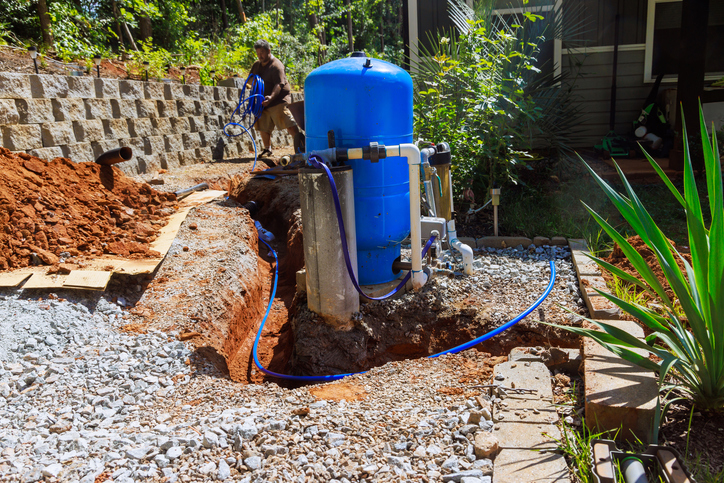
Buying a home with a private well is different from buying a home on city water. The water may look clear and taste fine, but that doesn’t mean it’s free of contaminants or properly treated.
For many homebuyers moving to the Lake Norman and greater Charlotte area, well water is unfamiliar territory. That’s why testing and inspection before closing are so important.
A little due diligence before closing can help you avoid unexpected water quality issues and give you confidence that your new home’s water is safe for your family.
Start with a Comprehensive Well Water Test
One of the biggest mistakes homebuyers make is assuming the required well water test tells the whole story.
In many North Carolina real estate transactions involving a private well, the lender or mortgage company may only require testing for bacteria—specifically total coliform and E. coli. While this is an important safety check, it only answers one question: Is the water bacteriologically safe at the time of testing?
It does not tell you whether the water contains excessive hardness, iron, manganese, sulfur, nitrates, low pH, or other common well water issues that can affect your family’s water quality, plumbing, fixtures, and appliances.
We’ve worked with many homeowners who received a passing bacteria test during the home-buying process, only to discover significant water quality issues after moving in.
A passing bacteria test is a good start—but it should never be the finish line.
To fully understand the water you’re buying, consider testing for:
Bacteria (Coliform and E. coli)
These can indicate contamination from surface water, septic systems, or well construction issues.
Nitrates
A common well water contaminant that can pose health risks, especially for infants and pregnant women.
Iron and Manganese
These minerals can cause staining, metallic tastes, discoloration, and buildup in plumbing fixtures and appliances.
Hardness
Hard water can shorten the lifespan of water heaters, dishwashers, washing machines, and plumbing fixtures.
Sulfur, pH, and Total Dissolved Solids (TDS)
These affect taste, odor, corrosion, and overall water quality.
Remember: many water contaminants are invisible. The water can appear crystal clear while still containing contaminants that impact your home and health.
Ask About the Well Itself
A private well is part of the home’s infrastructure and should be evaluated accordingly.
Ask the seller or your real estate agent:
- How deep is the well?
- How old is the well?
- Has the well ever experienced low production or run dry?
- When was the last water test performed?
- Have there been any repairs or modifications?
- Are records available for the well and any treatment equipment?
The more information you have, the better you can understand the condition and history of the water system.
Evaluate Existing Water Treatment Equipment
Many homes with well water already have treatment equipment installed.
Look for:
- Water softeners
- Iron filters
- Sediment filters
- Reverse osmosis systems
- UV disinfection systems
- Neutralizers or pH correction systems
If equipment is present, ask:
- How old is it?
- When was it last serviced?
- Are maintenance records available?
- Are replacement parts still readily available?
Even good equipment has a lifespan, and some systems may be overdue for maintenance or replacement.
Don’t Assume No Equipment Means No Problems
One of the biggest misconceptions we see among homebuyers is that if a home doesn’t have water treatment equipment, then the water must not need it.
In reality, the opposite is often true.
Many homes in the Lake Norman area were built 20, 30, or even 40 years ago when water quality expectations were different. Previous owners may have simply lived with iron stains, hard water, sulfur odors, or poor tasting water because they considered it normal.
We’ve tested countless wells where the homeowners had no filtration equipment installed, yet the water contained elevated levels of iron, manganese, hardness, sulfur, or other issues affecting both water quality and plumbing fixtures.
It’s also common for new homeowners to notice problems the previous owners overlooked. What one family accepted as “just part of living on a well” may be something a new family wants to address immediately.
The absence of water treatment equipment should never be viewed as proof that treatment isn’t needed. The only way to know what you’re working with is through comprehensive water testing.
At Artisanal Water Solutions
At Artisanal Water Solutions, we help homebuyers go beyond the minimum requirements to understand exactly what is in their water before closing. We provide comprehensive well water testing and evaluation so you can identify not just bacteria concerns, but the full range of potential issues that may impact your home. Our goal is to give you clarity and confidence in your water quality so there are no surprises after you move in.
Look for Signs of Water Problems Throughout the Home
The home itself can often provide clues about the water quality.
Keep an eye out for:
- Orange or brown staining in sinks, tubs, and toilets
- Black staining around fixtures
- White scale buildup on faucets and shower doors
- Rotten egg odors
- Cloudy water
- Low water pressure
- Excessive appliance wear
While these signs don’t replace testing, they can help identify potential issues worth investigating further.
Understand the Ongoing Maintenance Requirements
Owning a home on well water comes with responsibilities that city-water homeowners don’t always think about.
These may include:
- Annual water testing
- Filter replacements
- Water softener salt
- UV lamp replacements
- Periodic system maintenance
The good news is that well owners often have greater control over their water quality because they can customize treatment specifically for their home’s conditions.
Don’t Assume Clear Water Means Safe Water
One of the most common mistakes we see is homeowners assuming their water is safe because it looks clean.
Many contaminants have no color, odor, or taste.
We’ve seen wells test positive for bacteria, nitrates, excessive hardness, iron, manganese, and other issues despite the water appearing perfectly clear.
Testing is the only reliable way to know what’s actually in your water.
Why Local Expertise Matters
Well water varies dramatically from one property to the next. Two homes just a few miles apart can have completely different water chemistry and treatment needs.
The right solution depends on factors such as:
- Water chemistry
- Well depth
- Plumbing configuration
- Household water usage
- Existing treatment equipment
That’s why a professional water analysis is so important. The goal isn’t to install equipment—it’s to understand the water first and design the right solution based on the results.
Final Thoughts
Buying a home with well water shouldn’t be intimidating, but it should encourage you to ask the right questions before closing.
Before purchasing, make sure you:
- Order a comprehensive water test
- Review the well’s history and condition
- Evaluate any existing treatment equipment
- Understand future maintenance requirements
- Consult a water treatment professional if concerns arise
Taking these steps can help you avoid costly surprises and ensure your family’s water is safe, clean, and enjoyable for years to come.
Contact Artisanal Water today to schedule a 30 minute in home consultation with water quality expert. Call or text (704) 315-6344 or fill out our contact form
