Could Bacteria Be Getting Into Your Well Water?
If your home relies on a private well in the Charlotte or Lake Norman area, you are responsible for making sure your drinking water remains safe.
Unlike a municipal water supply, private well water isn’t continuously disinfected by a public water utility. Your water can also look crystal clear, taste perfectly normal, and have no noticeable odor while still containing bacteria.
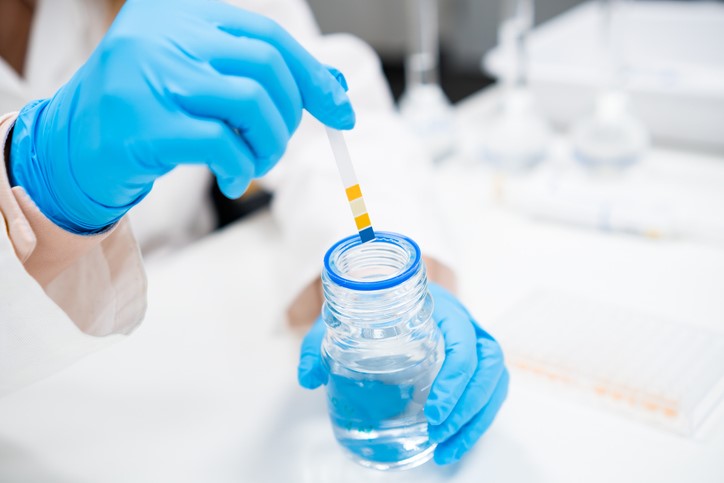
That’s why routine bacteria testing is such an important part of owning a private well. The EPA recommends testing private well water every year for E. Coli, total coliform, nitrates, total dissolved solids (TDS). If your home relies on a private well in the Charlotte or Lake Norman area, you are responsible for making sure your drinking water remains safe.
Unlike a municipal water supply, private well water isn’t continuously disinfected by a public water utility. Your water can also look crystal clear, taste perfectly normal, and have no noticeable odor while still containing bacteria.
That’s why routine bacteria testing is such an important part of owning a private well. The EPA recommends testing private well water every year for E. Coli, total coliform, nitrates, total dissolved solids (TDS) and ph
At Artisanal Water Solutions, we work with private well owners throughout Charlotte, Lake Norman, Mooresville, Huntersville, Cornelius, Denver, Concord, and surrounding communities. In addition to annual testing, we recommend properly designed ultraviolet (UV) disinfection for our well water customers as an added layer of protection against microbiological contamination.
Here’s what homeowners should understand about bacteria, testing, and protecting their well water.
What Does It Mean When a Well Tests Positive for Bacteria?
When homeowners hear that their well has “bacteria,” it’s important to understand exactly what was detected.
Two terms commonly found on well water laboratory reports are total coliform bacteria and E. coli.
Total Coliform Bacteria
Coliforms are a broad group of bacteria found naturally in soil, vegetation, surface water, and the environment.
A positive total coliform test does not necessarily mean your water contains a disease-causing organism. Instead, coliform bacteria are commonly used as an indicator that contamination may have entered the water supply.
A positive result can indicate that there is a pathway allowing surface water or other contaminants into the well or plumbing system.
E. coli
E. coli is more concerning.
E. coli is associated with fecal contamination, and its presence can indicate that human or animal waste has entered the water supply.
If E. coli is detected in drinking water, homeowners should take the result seriously and follow the recommendations of their testing laboratory or local health authority.
How Does Bacteria Get Into a Private Well?
Groundwater is naturally protected by layers of soil and rock, but wells can become vulnerable when something creates a pathway for contamination.
Potential sources include:
- A damaged or improperly sealed well cap
- Cracks or damage to the well casing
- Surface water entering around the well
- Flooding or heavy rainfall
- Well or pump repairs
- Plumbing work
- Nearby septic system problems
- Animal waste
- Changes in groundwater conditions
Sometimes bacterial contamination is a one-time event. Other times, repeated positive tests may indicate a problem with the construction, location, or condition of the well.
Can You Tell If Well Water Has Bacteria?
Usually, no.
This is one of the most important things for private well owners to understand.
Bacteria may not affect the:
- Color
- Taste
- Smell
- Clarity
of your water.
Water can look perfectly clean and still test positive for bacteria.
Testing is the only reliable way to know.
How Often Should You Test Well Water for Bacteria?
The EPA recommends testing private well water every year for total coliform bacteria, along with nitrates. EPA also recommends additional testing when circumstances suggest the water quality may have changed.
Additional testing is especially important after:
- Flooding
- Major storms
- Well repairs
- Pump replacement
- Plumbing work
- A change in taste, odor, color, or clarity
- A previous positive bacteria test
Testing is also particularly important when buying a home with a private well, because you may not know the well’s maintenance history or when the water was last tested.
A Water Test Is a Snapshot in Time
This is an important concept when thinking about bacteria.
A negative bacteria test tells you that bacteria weren’t detected in that particular sample at that particular time.
That’s valuable information—but conditions around a private well can change.
For example, imagine having your water tested in January and receiving a negative result. Several months later, heavy rainfall, a damaged well cap, well service, or another change could potentially introduce contamination.
Your next routine test may not occur until the following year.
This is one reason why, at Artisanal Water Solutions, we recommend UV disinfection for our private well customers even when their current bacteria test is negative.
Annual testing and UV treatment aren’t substitutes for one another. We view them as complementary layers of protection.
What Should You Do If Your Well Tests Positive for Bacteria?
A positive bacteria test doesn’t necessarily mean the first step is installing treatment equipment.
It’s important to determine why the bacteria are present.
Depending on the situation, the appropriate response may include:
- Confirming the laboratory result.
- Inspecting the well cap and visible well components.
- Looking for possible sources of contamination.
- Correcting problems with the well if necessary.
- Properly disinfecting the well and plumbing.
- Retesting the water.
If bacteria repeatedly return, further investigation may be necessary.
Water treatment should never be used as an excuse to ignore a structural problem with the well itself.
What Is Shock Chlorination?
Shock chlorination is a procedure used to disinfect a private well and the home’s plumbing system.
A concentrated chlorine solution is introduced into the well and allowed to circulate through the plumbing. After an appropriate contact period, the system is thoroughly flushed.
Shock chlorination may be appropriate:
- After certain well repairs
- Following pump replacement
- After a positive bacteria test
- After a well has been opened or serviced
- Following certain contamination events
However, it’s important to understand the difference between shock chlorination and continuous water treatment.
Shock chlorination disinfects the system at a particular point in time. It does not provide continuous protection against a future contamination event.
Why We Recommend UV Disinfection for Private Wells
A municipal water supply typically includes continuous disinfection and monitoring before water reaches your home.
A private well is different.
Because bacteria can potentially enter a well between annual tests, we recommend ultraviolet (UV) disinfection as an additional layer of protection for our private well customers.
A UV system treats water continuously as it enters the home.
As water passes through the UV chamber, it is exposed to ultraviolet light that inactivates microorganisms, preventing them from reproducing and causing infection.
UV treatment has several advantages:
- Continuous treatment
- No continuous addition of chlorine
- Doesn’t significantly change the taste or odor of the water
- Treats water entering the entire home
- Provides an additional barrier against microbiological contamination
For a homeowner who relies entirely on a private well for drinking water, we believe that additional layer of protection makes sense.
Does UV Replace Annual Bacteria Testing?
No.
We still recommend annual bacteria testing even when a home has a UV system.
The EPA’s annual testing recommendation remains important because a private well is an independent water source, and its condition can change over time.
Testing and UV serve different purposes.
Testing tells you what’s happening with the well.
UV provides ongoing microbiological treatment.
We recommend doing both.
Why Pretreatment Before UV Matters
Installing a UV system isn’t simply a matter of putting a UV light on any incoming water line.
For UV to perform properly, the water needs to be suitable for UV treatment.
Conditions such as:
- Iron
- Manganese
- Hardness
- Sediment
- Turbidity
can interfere with UV performance or create buildup on the quartz sleeve surrounding the UV lamp.
That’s why we evaluate the complete well water profile before designing a treatment system.
For example, a home with iron, hard water, low pH, and a bacteria concern may require a very different treatment configuration than a home where the incoming water has otherwise excellent chemistry.
What Doesn’t UV Remove?
UV is specifically designed for microbiological treatment.
It doesn’t remove dissolved contaminants or correct other water chemistry problems.
UV does not remove:
- Iron
- Manganese
- Hardness
- Nitrates
- Arsenic
- PFAS
- Sediment
- Low pH
Those issues require different treatment technologies.
This is why we don’t believe in a one-size-fits-all “well water system.” The right system depends on what’s actually in your water.
Don’t Forget About the Well Itself
Treatment is only one part of maintaining a private well.
Homeowners should periodically inspect the visible components of their well and look for issues such as a damaged casing or well cap. EPA guidance also recommends keeping the area around the well graded so surface runoff moves away from it and periodically inspecting exposed well components.
Look for:
- A secure sanitary well cap
- Cracks or damage to the casing
- Standing water around the well
- Signs of insects entering the cap
- Landscaping that directs water toward the well
If you suspect a problem with the well itself, have it evaluated by a qualified well professional.
Bacteria and Well Water in Charlotte & Lake Norman
Private wells are common throughout portions of Iredell, Lincoln, Cabarrus, Mecklenburg, Rowan, and surrounding counties.
One thing we emphasize to homeowners is that water quality isn’t necessarily permanent.
A well that produced excellent water when a home was built can experience different conditions years later. Changes to the well, surrounding property, groundwater, weather, or plumbing can all affect water quality.
That’s why our approach to well water is built around three principles:
Test it. Understand it. Treat it appropriately.
For microbiological protection, we add another layer: annual testing plus properly designed UV disinfection.
Protecting Your Family’s Well Water
Bacteria are different from many of the other well water problems we’ve discussed in this series.
Iron can leave orange stains.
Sulfur can produce a rotten-egg odor.
Hard water can leave white scale.
Low pH can corrode plumbing.
Bacteria may give you no warning at all.
That’s why routine testing is so important—and why we recommend UV disinfection as an additional layer of protection for private well homes.
At Artisanal Water Solutions, we provide comprehensive well water testing and customized treatment solutions for homeowners throughout Charlotte, Lake Norman, Mooresville, Huntersville, Cornelius, Denver, Concord, and surrounding communities.
Our goal isn’t to put as much equipment as possible in your home. It’s to understand your water, explain what we find, and design the right treatment approach for your specific well.
If you rely on a private well, start by understanding what’s actually in your water.
At Artisanal Water Solutions, we work with private well owners throughout Charlotte, Lake Norman, Mooresville, Huntersville, Cornelius, Denver, Concord, and surrounding communities. In addition to annual testing, we recommend properly designed ultraviolet (UV) disinfection for our well water customers as an added layer of protection against microbiological contamination.
Here’s what homeowners should understand about bacteria, testing, and protecting their well water.
What Does It Mean When a Well Tests Positive for Bacteria?
When homeowners hear that their well has “bacteria,” it’s important to understand exactly what was detected.
Two terms commonly found on well water laboratory reports are total coliform bacteria and E. coli.
Total Coliform Bacteria
Coliforms are a broad group of bacteria found naturally in soil, vegetation, surface water, and the environment.
A positive total coliform test does not necessarily mean your water contains a disease-causing organism. Instead, coliform bacteria are commonly used as an indicator that contamination may have entered the water supply.
A positive result can indicate that there is a pathway allowing surface water or other contaminants into the well or plumbing system.
E. coli
E. coli is more concerning.
E. coli is associated with fecal contamination, and its presence can indicate that human or animal waste has entered the water supply.
If E. coli is detected in drinking water, homeowners should take the result seriously and follow the recommendations of their testing laboratory or local health authority.
How Does Bacteria Get Into a Private Well?
Groundwater is naturally protected by layers of soil and rock, but wells can become vulnerable when something creates a pathway for contamination.
Potential sources include:
- A damaged or improperly sealed well cap
- Cracks or damage to the well casing
- Surface water entering around the well
- Flooding or heavy rainfall
- Well or pump repairs
- Plumbing work
- Nearby septic system problems
- Animal waste
- Changes in groundwater conditions
Sometimes bacterial contamination is a one-time event. Other times, repeated positive tests may indicate a problem with the construction, location, or condition of the well.
Can You Tell If Well Water Has Bacteria?
Usually, no.
This is one of the most important things for private well owners to understand.
Bacteria may not affect the:
- Color
- Taste
- Smell
- Clarity
of your water.
Water can look perfectly clean and still test positive for bacteria.
Testing is the only reliable way to know.
How Often Should You Test Well Water for Bacteria?
The EPA recommends testing private well water every year for total coliform bacteria, along with nitrates. EPA also recommends additional testing when circumstances suggest the water quality may have changed.
Additional testing is especially important after:
- Flooding
- Major storms
- Well repairs
- Pump replacement
- Plumbing work
- A change in taste, odor, color, or clarity
- A previous positive bacteria test
Testing is also particularly important when buying a home with a private well, because you may not know the well’s maintenance history or when the water was last tested.
A Water Test Is a Snapshot in Time
This is an important concept when thinking about bacteria.
A negative bacteria test tells you that bacteria weren’t detected in that particular sample at that particular time.
That’s valuable information—but conditions around a private well can change.
For example, imagine having your water tested in January and receiving a negative result. Several months later, heavy rainfall, a damaged well cap, well service, or another change could potentially introduce contamination.
Your next routine test may not occur until the following year.
This is one reason why, at Artisanal Water Solutions, we recommend UV disinfection for our private well customers even when their current bacteria test is negative.
Annual testing and UV treatment aren’t substitutes for one another. We view them as complementary layers of protection.
What Should You Do If Your Well Tests Positive for Bacteria?
A positive bacteria test doesn’t necessarily mean the first step is installing treatment equipment.
It’s important to determine why the bacteria are present.
Depending on the situation, the appropriate response may include:
- Confirming the laboratory result.
- Inspecting the well cap and visible well components.
- Looking for possible sources of contamination.
- Correcting problems with the well if necessary.
- Properly disinfecting the well and plumbing.
- Retesting the water.
If bacteria repeatedly return, further investigation may be necessary.
Water treatment should never be used as an excuse to ignore a structural problem with the well itself.
What Is Shock Chlorination?
Shock chlorination is a procedure used to disinfect a private well and the home’s plumbing system.
A concentrated chlorine solution is introduced into the well and allowed to circulate through the plumbing. After an appropriate contact period, the system is thoroughly flushed.
Shock chlorination may be appropriate:
- After certain well repairs
- Following pump replacement
- After a positive bacteria test
- After a well has been opened or serviced
- Following certain contamination events
However, it’s important to understand the difference between shock chlorination and continuous water treatment.
Shock chlorination disinfects the system at a particular point in time. It does not provide continuous protection against a future contamination event.
Why We Recommend UV Disinfection for Private Wells
A municipal water supply typically includes continuous disinfection and monitoring before water reaches your home.
A private well is different.
Because bacteria can potentially enter a well between annual tests, we recommend ultraviolet (UV) disinfection as an additional layer of protection for our private well customers.
A UV system treats water continuously as it enters the home.
As water passes through the UV chamber, it is exposed to ultraviolet light that inactivates microorganisms, preventing them from reproducing and causing infection.
UV treatment has several advantages:
- Continuous treatment
- No continuous addition of chlorine
- Doesn’t significantly change the taste or odor of the water
- Treats water entering the entire home
- Provides an additional barrier against microbiological contamination
For a homeowner who relies entirely on a private well for drinking water, we believe that additional layer of protection makes sense.
Does UV Replace Annual Bacteria Testing?
No.
We still recommend annual bacteria testing even when a home has a UV system.
The EPA’s annual testing recommendation remains important because a private well is an independent water source, and its condition can change over time.
Testing and UV serve different purposes.
Testing tells you what’s happening with the well.
UV provides ongoing microbiological treatment.
We recommend doing both.
Why Pretreatment Before UV Matters
Installing a UV system isn’t simply a matter of putting a UV light on any incoming water line.
For UV to perform properly, the water needs to be suitable for UV treatment.
Conditions such as:
- Iron
- Manganese
- Hardness
- Sediment
- Turbidity
can interfere with UV performance or create buildup on the quartz sleeve surrounding the UV lamp.
That’s why we evaluate the complete well water profile before designing a treatment system.
For example, a home with iron, hard water, low pH, and a bacteria concern may require a very different treatment configuration than a home where the incoming water has otherwise excellent chemistry.
What Doesn’t UV Remove?
UV is specifically designed for microbiological treatment.
It doesn’t remove dissolved contaminants or correct other water chemistry problems.
UV does not remove:
- Iron
- Manganese
- Hardness
- Nitrates
- Arsenic
- PFAS
- Sediment
- Low pH
Those issues require different treatment technologies.
This is why we don’t believe in a one-size-fits-all “well water system.” The right system depends on what’s actually in your water.
Don’t Forget About the Well Itself
Treatment is only one part of maintaining a private well.
Homeowners should periodically inspect the visible components of their well and look for issues such as a damaged casing or well cap. EPA guidance also recommends keeping the area around the well graded so surface runoff moves away from it and periodically inspecting exposed well components.
Look for:
- A secure sanitary well cap
- Cracks or damage to the casing
- Standing water around the well
- Signs of insects entering the cap
- Landscaping that directs water toward the well
If you suspect a problem with the well itself, have it evaluated by a qualified well professional.
Bacteria and Well Water in Charlotte & Lake Norman
Private wells are common throughout portions of Iredell, Lincoln, Cabarrus, Mecklenburg, Rowan, and surrounding counties.
One thing we emphasize to homeowners is that water quality isn’t necessarily permanent.
A well that produced excellent water when a home was built can experience different conditions years later. Changes to the well, surrounding property, groundwater, weather, or plumbing can all affect water quality.
That’s why our approach to well water is built around three principles:
Test it. Understand it. Treat it appropriately.
For microbiological protection, we add another layer: annual testing plus properly designed UV disinfection.
Protecting Your Family’s Well Water
Bacteria are different from many of the other well water problems we’ve discussed in this series.
Iron can leave orange stains.
Sulfur can produce a rotten-egg odor.
Hard water can leave white scale.
Low pH can corrode plumbing.
Bacteria may give you no warning at all.
That’s why routine testing is so important—and why we recommend UV disinfection as an additional layer of protection for private well homes.
At Artisanal Water Solutions, we provide comprehensive well water testing and customized treatment solutions for homeowners throughout Charlotte, Lake Norman, Mooresville, Huntersville, Cornelius, Denver, Concord, and surrounding communities.
Our goal isn’t to put as much equipment as possible in your home. It’s to understand your water, explain what we find, and design the right treatment approach for your specific well.
If you rely on a private well, start by understanding what’s actually in your water.
Schedule your professional well water analysis today and learn whether a UV system is the right solution for your home. Call or text (704) 315-6344 or fill out our contact form
